Mercedes-Benz has spent decades defining what a luxury sedan should feel like.
The company’s S-Class has traditionally represented the top of its conventional passenger-car range, combining comfort, technology, refinement and prestige.
The Mercedes-Benz EQS was created to bring that same philosophy into the electric era.
Instead of simply turning an existing petrol-powered Mercedes into an EV, the EQS was designed around an electric platform and a long-range, comfort-focused driving experience.
The result is one of the most technologically ambitious luxury electric sedans on the market.
But several years after its introduction, the question has changed.
Is the EQS still one of the best luxury EVs you can buy?
The answer depends heavily on what you want from an electric luxury car.
The EQS remains exceptionally quiet and comfortable, and its long-range capability is impressive. But competitors such as the Lucid Air and Porsche Taycan have raised expectations for electric performance and driving dynamics.
What Is the Mercedes-Benz EQS?
The EQS is Mercedes-Benz’s flagship electric sedan.
It sits at the top end of the company’s electric passenger-car range and is positioned as a technological and luxury showcase.
Unlike the Mercedes EQE, which is smaller, the EQS is a large sedan designed to provide substantial passenger space and a particularly quiet ride.
The current 2026 EQS lineup includes versions such as the EQS 450+, EQS 450 4MATIC and EQS 580 4MATIC, depending on market. Mercedes also offers the high-performance AMG EQS in some markets.
The EQS 450+ is the range-focused version, while the EQS 580 adds all-wheel drive and considerably more power.
The EQS Is Built Around Comfort
The first thing you notice about the EQS isn’t necessarily its acceleration.
It’s the silence.
Electric vehicles already eliminate much of the mechanical noise associated with internal-combustion engines.
Mercedes takes that further with extensive insulation, a sophisticated suspension system and a cabin designed to isolate passengers from the road.
Car and Driver described the EQS as delivering the kind of quiet, smooth ride expected from a Mercedes flagship.
That makes the EQS particularly appealing to drivers who value relaxed long-distance travel rather than aggressive driving.
This is not an EV designed primarily to make every trip feel like a racetrack.
It’s designed to make a long journey feel effortless.
A Huge Battery Gives the EQS Serious Range
One of the EQS’s biggest strengths is its battery.
For the current models, Mercedes uses a 118-kWh battery pack.
The 2026 EQS 450+ is rated for up to 390 miles (628 km) of EPA-estimated range in the U.S. market.
The EQS 450 4MATIC is rated at around 367 miles, while the EQS 580 4MATIC is rated at about 371 miles.
Those figures put the EQS among the longer-range luxury EVs.
And real-world testing suggests the car can perform strongly outside laboratory conditions.
MotorTrend, for example, recorded 392 miles in its 70-mph road-trip range test with the 2026 EQS 450+.
That is an impressive result for a large luxury sedan.
But There’s a Trade-Off
A large battery helps the EQS travel long distances.
It also makes the car heavy.
That’s one reason the EQS doesn’t feel as nimble as some smaller or more performance-oriented electric sedans.
The EQS prioritises:
Comfort + range + refinement
rather than:
Light weight + sharp handling + maximum performance.
That isn’t necessarily a weakness.
It’s simply a different interpretation of what a luxury EV should be.
How Fast Is the Mercedes EQS?
The EQS isn’t slow.
Far from it.
The 2026 EQS 450+ produces 355 horsepower and 419 lb-ft of torque, according to Mercedes-Benz USA. It can accelerate from 0–60 mph in about 5.9 seconds according to Mercedes’ current specification.
The EQS 580 4MATIC is considerably quicker.
It produces 536 horsepower and 633 lb-ft of torque, with Mercedes listing a 0–60 mph time of 4.2 seconds for the 2026 model.
Independent testing has produced even quicker numbers for the EQS 580.
Car and Driver recorded 3.7 seconds to 60 mph with the model it tested.
So although the EQS is designed primarily for comfort, it has more than enough performance for normal driving.
The Interior Is Where the EQS Makes Its Biggest Statement
Step inside the EQS and the car’s technological ambitions become obvious.
The cabin combines high-quality materials with large digital displays and Mercedes-Benz’s MBUX infotainment system.
Higher-specification versions can be equipped with Mercedes’ enormous Hyperscreen, which stretches across much of the dashboard.
It’s an impressive piece of technology.
But there’s an important distinction between impressive and intuitive.
A huge screen can look spectacular in a showroom, but some drivers may prefer physical controls for functions they use frequently.
That’s one area where the EQS has attracted criticism.
The car is packed with technology, but not everyone will find every interface equally easy to use.
The Rear Seats Matter Too
Luxury isn’t just about what the driver experiences.
A flagship sedan needs to work well for passengers.
The EQS has a long wheelbase and generous interior dimensions.
Mercedes-Benz lists approximately 40.4 inches of rear legroom for the current sedan, along with seating for five.
That makes it a strong option for owners who frequently carry passengers.
For someone using the car as a chauffeur-driven vehicle, the EQS’s quiet cabin and spacious rear compartment can be particularly appealing.
The EQS Doesn’t Look Like a Traditional S-Class
This is probably the most controversial part of the car.
The EQS doesn’t have the traditional proportions of an S-Class.
Its exterior is extremely aerodynamic, with a smooth roofline and short overhangs.
The design prioritises aerodynamic efficiency to help reduce energy consumption.
That approach makes sense for an EV.
But some buyers simply don’t like the styling.
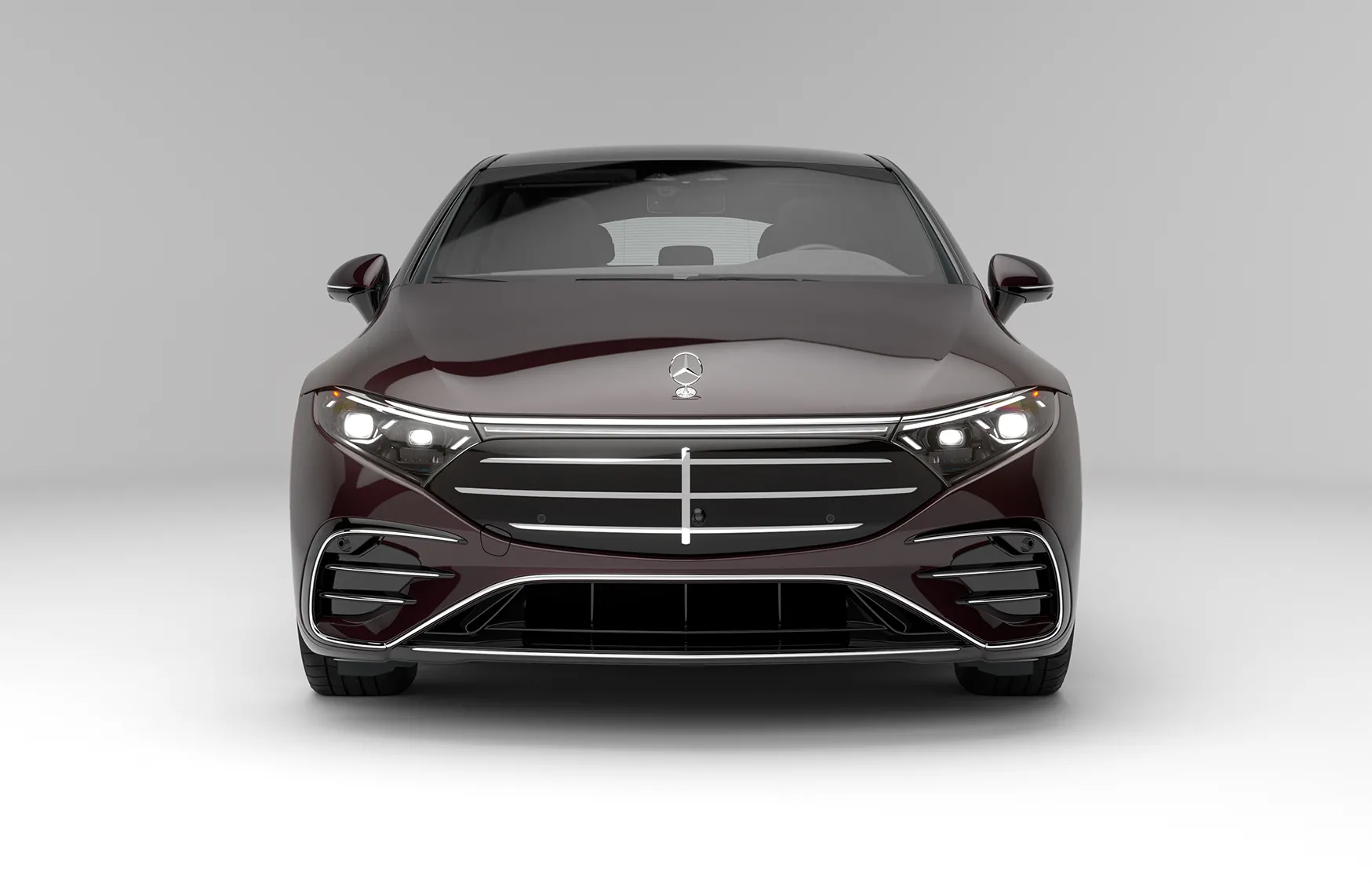
Mercedes has responded with styling changes that make newer EQS models look somewhat more closely related to conventional Mercedes luxury sedans.
For 2025, Mercedes introduced a revised front-end design featuring a more traditional Mercedes-style grille treatment and upright hood ornament.
It’s a subtle acknowledgement that some customers wanted the EQS to look more recognisably like a Mercedes.
Charging the EQS
The EQS supports DC fast charging at up to 200 kW.
Mercedes lists a 10–80% charging time of approximately 31 minutes under suitable conditions.
That’s respectable for a vehicle with such a large battery.
At home, charging takes considerably longer.
Mercedes lists a 9.6-kW AC onboard charger for the U.S.-market EQS, with a full 10–100% charge taking roughly 14 hours under the specified conditions.
For most owners, that isn’t a major problem.
The ideal approach is to charge overnight.
You don’t need to wait beside the vehicle until the battery reaches 100 percent.
What About Long-Distance Travel?
This is arguably where the EQS makes the most sense.
A combination of:
- Large battery
- Long range
- Quiet cabin
- Comfortable seats
- Sophisticated suspension
- Strong high-speed stability
makes the EQS particularly suited to motorway and highway travel.
A large luxury EV doesn’t necessarily need to be the fastest car.
It needs to make a 300-mile journey feel easy.
The EQS does that very well.
The Technology Is Impressive — But Is It Necessary?
This is one of the most interesting questions surrounding the EQS.
Mercedes has filled the car with technology.
Depending on specification, buyers can get advanced driver-assistance systems, sophisticated infotainment, digital displays, rear-wheel steering and other high-end features.
The problem is that technology can add complexity.
And complexity isn’t always the same as luxury.
A luxury vehicle should make the driver’s life easier.
If a function requires several taps through a touchscreen menu when a physical button would have been simpler, the technology isn’t necessarily improving the experience.
This is one reason the EQS’s enormous technology package has received mixed reactions from reviewers. Car and Driver, for example, has described the Hyperscreen as impressive but also questioned whether all that screen technology necessarily enhances the luxury experience.
Rear-Wheel Steering Makes a Big Car Easier to Handle
The EQS is a large sedan.
That means manoeuvring it around tight urban streets could potentially be challenging.
Mercedes addresses this with rear-axle steering.
Depending on configuration, the rear wheels can turn in the opposite direction to the front wheels at low speeds, effectively reducing the turning circle.
Mercedes lists up to 10 degrees of rear-axle steering on the EQS 580 4MATIC.
That can make a surprisingly large vehicle feel easier to position in tight spaces.
For city driving, this is one of the EQS’s more useful technologies.
How Does the EQS Compare With the Competition?
The EQS competes in an increasingly crowded luxury-EV segment.
Some of its major rivals include:
Lucid Air
The Lucid Air is arguably the biggest threat to the EQS in terms of efficiency and range.
Its lighter design and highly efficient powertrain allow some versions to travel farther on a charge than the EQS.
Porsche Taycan
The Taycan focuses more heavily on performance and driving dynamics.
It feels more like a sports sedan, while the EQS is more focused on comfort.
BMW i7
The BMW i7 is probably one of the most direct competitors.
Like the EQS, it combines luxury, technology, long-distance comfort and electric power.
Tesla Model S
The Model S remains a major reference point for electric range and performance, although its approach to luxury is quite different from Mercedes-Benz.
Where the EQS Wins
The EQS has several major strengths.
1. Comfort
This is probably its biggest advantage.
The car is exceptionally quiet and relaxed.
2. Range
The EQS 450+ can travel up to 390 miles according to current U.S. EPA estimates.
3. Interior Technology
The car offers one of the most technologically ambitious cabins in its class.
4. Passenger Space
The EQS works well as a large luxury sedan rather than simply a driver’s car.
5. Refinement
This is still a Mercedes flagship.
The overall experience is designed around smoothness.
Where the EQS Falls Short
The car isn’t perfect.
1. Weight
The large battery and luxury equipment make the EQS extremely heavy.
2. Price
This is not an affordable EV.
The 2026 EQS 450+ starts at about $99,900 in the U.S., before applicable options and charges, according to Mercedes-Benz USA.
The EQS 580 4MATIC starts around $123,900.
3. Driving Dynamics
If your priority is sharp steering and sporty handling, rivals such as the Porsche Taycan may be more satisfying.
4. Technology Can Feel Excessive
The cabin’s technology is impressive but can sometimes feel like technology for technology’s sake.
5. Efficiency Isn’t Class-Leading
The EQS has excellent range, but that doesn’t necessarily mean it uses energy as efficiently as the very best EVs.
The Lucid Air remains particularly strong in this area.
What About Reliability?
This is an area where buyers should do more research.
Electric vehicles generally have fewer mechanical components than combustion-powered cars, but that doesn’t mean a technologically complex luxury EV is maintenance-free.
The EQS has sophisticated:
- Air suspension
- Electronics
- Infotainment
- Driver-assistance systems
- Battery-management systems
- Electric motors
- Charging hardware
Long-term ownership can therefore be more complicated than simply looking at the number of moving parts.
For a used EQS, the condition of the battery, software history, warranty coverage and maintenance records should all be investigated.
What About Battery Life?
The EQS uses a large lithium-ion battery pack.
Modern EV batteries are designed to last many years, but battery capacity naturally changes over time.
Mercedes-Benz provides battery warranty coverage in some markets; for example, Edmunds reports a 10-year/155,000-mile battery warranty with a 70% capacity retention threshold for the U.S.-market EQS. Warranty terms vary by market, so buyers should verify the terms applicable to their country.
For someone considering a used EQS, getting a battery-health assessment can therefore be worthwhile.
Mercedes Is Also Exploring the Next Generation of Battery Technology
Interestingly, the EQS has become something of a test bed for Mercedes-Benz’s future battery technology.
In 2025, Mercedes-Benz demonstrated a modified EQS equipped with a lithium-metal solid-state battery.
The vehicle travelled 1,205 kilometres (749 miles) from Stuttgart to Malmö without recharging, arriving with approximately 137 kilometres of estimated remaining range.
This was a technology demonstration rather than the specification of a production EQS available to customers.
But it demonstrates where Mercedes believes EV technology could eventually go.
If solid-state batteries can eventually deliver substantially greater energy density in production vehicles, luxury EVs could become lighter and capable of much longer real-world ranges.
Is the Mercedes EQS Worth Buying in 2026?
That depends on what you want.
If you want the most exciting luxury EV to drive, there are stronger candidates.
If you want maximum range per kilowatt-hour, the Lucid Air deserves serious consideration.
If performance is the priority, the Porsche Taycan is difficult to ignore.
But if your priority is:
Luxury + silence + comfort + range + technology
the EQS remains a compelling package.
It’s particularly strong for long-distance drivers and buyers who want an electric vehicle that feels more like a traditional luxury limousine than a futuristic performance machine.
What About the EQS in Nigeria?
This is where the EQS becomes particularly interesting for GoGreenway’s audience.
Nigeria’s EV market is still developing, and charging infrastructure remains a significant consideration for anyone thinking about purchasing a premium electric vehicle.
The EQS’s long range is certainly an advantage.
But a large luxury EV needs more than an impressive battery.
A potential Nigerian owner should consider:
- Where the car will be charged
- Whether reliable home charging is available
- Backup electricity
- Public charging availability along regular routes
- Service and diagnostic support
- Replacement parts
- Insurance
- Tyres
- Battery warranty coverage
- Import and registration costs
For an EQS owner who has reliable home charging, the experience could be very different from that of someone who depends entirely on public chargers.
This is particularly important because the EQS is a large, technologically complex luxury vehicle.
Buying one purely because it is electric isn’t enough.
You need the infrastructure to support it.
The EQS Isn’t Trying to Be a Tesla Model S
This is worth emphasising.
The EQS isn’t primarily about winning drag races.
It isn’t primarily about having the largest touchscreen.
And it isn’t simply an electric replacement for a conventional Mercedes S-Class.
Its real strength is the combination of silence, comfort and long-distance capability.
That is the philosophy Mercedes has brought to the car.
And despite the intense competition in the luxury-EV market, it remains a convincing one.
GoGreenway Verdict
The Mercedes-Benz EQS remains one of the most sophisticated electric luxury sedans available.
Its 118-kWh battery, long driving range and extremely quiet cabin make it particularly well suited to long-distance luxury travel. The current EQS 450+ can travel up to 390 miles on a charge according to U.S. EPA estimates, while the EQS 580 4MATIC combines 536 horsepower with a 371-mile estimated range.
But the EQS is no longer operating in an empty field.
The Lucid Air offers exceptional range and efficiency.
The Porsche Taycan provides stronger driving dynamics.
The BMW i7 offers another interpretation of electric luxury.
That means the EQS can no longer rely on its technology alone to justify its price.
Its biggest selling point is how it makes you feel behind the wheel.
It is quiet, smooth, spacious and exceptionally refined.
For buyers who want an electric luxury sedan that prioritises comfort over outright sportiness, the EQS remains a strong choice.
For everyone else, there are now enough excellent alternatives that the Mercedes deserves to be compared carefully before you sign the cheque.
The EQS may not be the most exciting luxury EV — but it remains one of the most relaxing.
Sources
- Mercedes-Benz USA — 2026 EQS 450+ Sedan
- Mercedes-Benz USA — 2026 EQS 580 4MATIC Sedan
- Car and Driver — 2026 Mercedes-Benz EQS Review
- MotorTrend — 2026 Mercedes-Benz EQS450+ First Test
- Mercedes-Benz Group — EQS Solid-State Battery Demonstration