One of the biggest challenges facing electric vehicles is not simply finding a bigger battery.
It is finding a way to store more energy in the same amount of space.
That is where silicon comes in.
Battery company Sila is developing lithium-ion battery technology that replaces much of the conventional graphite anode with silicon. The company says its silicon-anode technology can increase energy density significantly, potentially allowing electric vehicles to travel farther without requiring a physically larger battery pack.
Sila has previously described its Titan Silicon technology as capable of delivering substantially higher energy density than conventional graphite-based anodes.
For EV manufacturers, the attraction is obvious.
More energy in the same battery pack could mean more driving range, less battery weight, or potentially a combination of both.
But silicon batteries also come with a difficult engineering problem.
And solving that problem could be just as important as achieving higher energy density.
Why silicon could change EV batteries
Today’s lithium-ion batteries commonly use graphite as the anode material.
During charging, lithium ions move from the cathode to the anode, where they are stored until the battery is discharged.
Graphite has worked extremely well for decades.
It is relatively stable, widely available and already supported by a huge global manufacturing industry.
But graphite has a limitation:
It cannot store as much lithium as silicon.
Silicon has a theoretical lithium-storage capacity many times higher than graphite.
That makes it extremely attractive to battery engineers.
If manufacturers can successfully use more silicon in the anode without sacrificing durability, they can potentially increase the amount of energy stored in a battery without simply making the battery physically larger.
The 20% range idea
This is where the claim behind the headline comes from.
Sila’s silicon-anode technology is designed to increase the energy density of lithium-ion cells.
In practical terms, higher energy density means a battery can store more energy for a given amount of weight or volume.
That creates several possibilities.
An automaker could use the additional energy density to:
- Increase driving range
- Reduce battery size
- Reduce battery weight
- Improve efficiency
- Keep the same range while using fewer battery materials
The most obvious consumer benefit is additional range.
A vehicle that currently travels 400 km on a charge could potentially move significantly farther without requiring a dramatically larger battery.
But the exact increase depends on the vehicle, battery chemistry, pack design and how much silicon is ultimately used.
The 20% figure should therefore be treated as a potential outcome, not a guaranteed improvement for every EV.
Silicon has one enormous advantage
The fundamental reason battery companies are interested in silicon is its ability to store lithium.
The theoretical capacity of silicon is far higher than that of graphite.
That sounds like an obvious replacement.
So why hasn’t the entire battery industry already switched?
Because there is a problem.
A very big one.
Silicon expands when it charges
Silicon can expand dramatically as lithium enters its structure.
That expansion and contraction happens repeatedly during charging and discharging.
Over many cycles, the physical changes can damage the electrode.
The material can crack.
Its electrical connections can deteriorate.
The battery can lose capacity.
And unwanted chemical reactions can increase.
This is one of the biggest obstacles to making high-silicon batteries durable enough for demanding applications such as electric vehicles.
Think of it as a repeated expansion problem
Imagine a material that expands every time you fill it with energy and contracts every time you use that energy.
Now repeat the process hundreds or thousands of times.
The material has to survive that mechanical stress without losing its ability to store lithium.
That’s essentially the challenge battery engineers face with silicon.
The theoretical energy-storage advantage is enormous.
The practical engineering challenge is equally significant.
Sila’s approach is to engineer around the problem
Sila isn’t simply putting chunks of silicon into a conventional graphite battery.
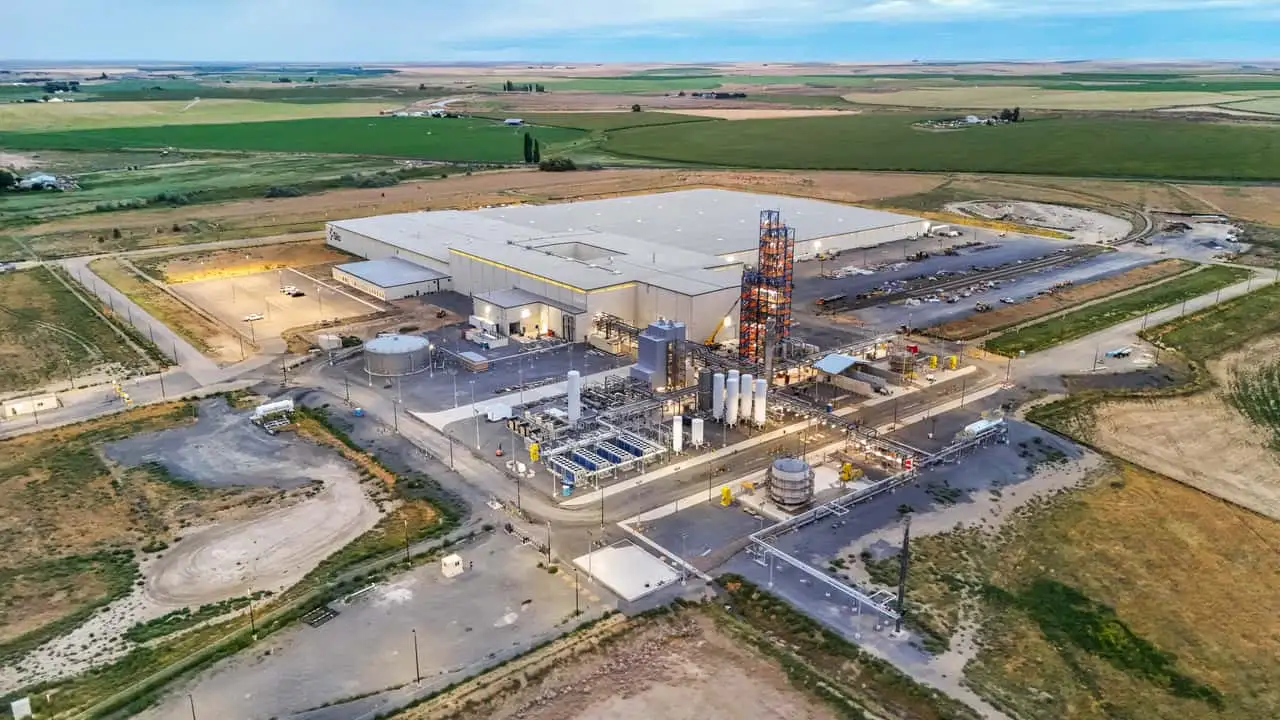
The company has developed a proprietary silicon-anode material called Titan Silicon.
The objective is to take advantage of silicon’s high energy-storage capability while controlling the problems caused by expansion.
That involves engineering the structure and composition of the anode at a microscopic level.
The result is intended to be a material that can replace conventional graphite while maintaining the cycle life and safety characteristics required for commercial batteries.
Why this matters for electric cars
Battery size is one of the biggest constraints in EV design.
A larger battery provides more range, but it also adds:
- Weight
- Cost
- Raw-material requirements
- Packaging requirements
- Manufacturing complexity
If manufacturers can increase energy density instead, they can potentially achieve more range without simply adding more battery cells.
That could be a much more elegant solution.
More range without more battery mass
Consider a simplified example.
Imagine an EV with a 100-kWh battery that provides approximately 500 km of real-world range.
If a new battery technology increased usable energy density enough to provide 20% more range without increasing the physical battery size, the same vehicle could potentially travel around 600 km.
Alternatively, the manufacturer could keep the 500-km range and use a smaller battery.
That second option is important.
Smaller batteries could be just as valuable
The EV industry often focuses on range.
But reducing battery size can have benefits of its own.
A smaller battery can mean:
Less weight.
Lower material consumption.
Lower manufacturing cost.
Potentially better efficiency.
Less energy required to move the vehicle.
So higher energy density doesn’t necessarily mean every EV needs to become a 700-km road-trip machine.
Automakers could use the technology to make vehicles lighter and more efficient instead.
Weight is particularly important
Battery packs are heavy.
A large EV battery can weigh several hundred kilograms.
That mass affects everything from acceleration to braking to energy consumption.
Reducing battery weight can create a positive feedback loop.
A lighter vehicle needs less energy to move.
Less energy consumption means a smaller battery may be sufficient.
A smaller battery makes the vehicle lighter again.
Higher-energy-density cells could therefore help manufacturers attack the problem from both directions.
The technology could also help large EVs
Silicon-anode batteries may be especially interesting for vehicles where battery weight is already a major concern.
Large electric SUVs and pickup trucks require substantial batteries because of their size, weight and aerodynamic characteristics.
Reducing the weight of the battery pack could improve efficiency.
The same applies to electric performance cars.
A lighter battery could potentially improve handling as well as range.
But battery chemistry is a balancing act
There is no single battery chemistry that is perfect for every vehicle.
Manufacturers have to balance:
- Energy density
- Cost
- Safety
- Cycle life
- Charging speed
- Temperature performance
- Availability of raw materials
- Manufacturing complexity
A battery with extremely high energy density isn’t automatically better if it costs too much or degrades quickly.
That’s why silicon’s success will ultimately depend on whether manufacturers can make it work reliably and economically at scale.
Silicon isn’t completely new
This is another important point.
Silicon has already appeared in some lithium-ion batteries.
The transition isn’t necessarily from:
100% graphite → 100% silicon.
Instead, manufacturers can incorporate silicon into anodes alongside graphite or use increasingly high concentrations of silicon.
That makes the technology more of an evolution than an overnight revolution.
Why graphite isn’t going away immediately
Graphite has several advantages.
The supply chain is mature.
Manufacturers understand how to process it.
Battery factories are already designed around graphite-based cells.
And modern graphite batteries can deliver excellent durability.
Replacing graphite therefore requires more than demonstrating that silicon can store more energy.
The new material needs to be compatible with large-scale manufacturing.
It needs to remain stable.
And it needs to make financial sense.
Manufacturing is the real test
This is perhaps the most important question for Sila and other silicon-battery developers.
Can the technology move from laboratory demonstrations and pilot production to millions of battery cells?
Making a few excellent cells is one thing.
Making millions of identical cells at a competitive price is another.
Automotive manufacturers require enormous consistency.
A battery cell must perform within very tight specifications.
A small defect rate can become a major problem when production reaches millions of units.
Sila has been targeting automotive applications
Sila isn’t developing its technology simply for smartphones or consumer electronics.
The company has been targeting electric vehicles as one of its major applications.
That matters because automotive batteries face much more demanding requirements than many smaller consumer batteries.
They need to survive years of:
- Charging
- Discharging
- Heat
- Cold
- Vibration
- Fast charging
- High power demand
And they need to do it safely.
The Mercedes-Benz connection
One of the most significant developments around Sila’s technology has been its relationship with Mercedes-Benz.
Mercedes-Benz has invested in Sila and has been working with the company on using silicon-anode technology in future electric vehicles.
That relationship gives Sila an important potential route into mass-market automotive production.
The involvement of a major automaker also demonstrates that established manufacturers are seriously interested in the potential of silicon-based anodes.
Mercedes wants higher energy density
For a premium automaker, higher battery energy density can have a major effect on vehicle design.
Mercedes-Benz can use additional energy density to pursue longer-range EVs without simply increasing battery size.
That could help reduce the compromise between range and vehicle weight.
It could also free designers from having to dedicate as much physical space and mass to the battery.
The technology isn’t only about range
This is where the story becomes more interesting.
If silicon allows a manufacturer to store more energy in the same space, there are several ways to use that advantage.
Option 1: More range
Keep the battery approximately the same size and increase driving range.
Option 2: Smaller battery
Keep the same driving range but reduce battery capacity.
Option 3: Lighter vehicle
Use the saved battery weight to reduce overall vehicle mass.
Option 4: More performance
Use the weight savings to improve acceleration, handling or efficiency.
Option 5: Faster charging
Depending on the complete cell design, silicon-based anodes may also contribute to improved charging performance.
The actual benefit will depend on how automakers design the complete battery.
Faster charging could be a major advantage
Range anxiety isn’t the only concern with EVs.
Some drivers are more concerned about charging time.
A battery that can add hundreds of kilometres in a relatively short charging stop could make electric cars much more convenient for long-distance driving.
Silicon-based anodes are therefore being investigated not just for energy density but also for their potential contribution to fast-charging batteries.
However, charging performance depends on the entire battery system.
The anode is only one component.
The cathode still matters
A battery consists of more than an anode.
There is also the cathode, electrolyte, separator, current collectors and battery-management system.
Improving one component doesn’t automatically transform the entire battery.
That’s why headlines suggesting silicon alone will suddenly double EV range should be treated with caution.
The real-world improvement comes from the complete cell architecture.
Battery packs are also becoming smarter
Modern EV batteries aren’t simply collections of cells.
They contain sophisticated battery-management systems that monitor:
- Temperature
- Voltage
- Current
- State of charge
- State of health
- Cell balancing
Software plays a major role in determining how safely and efficiently the battery operates.
That becomes particularly important with new chemistries.
Thermal management matters
Heat is one of the biggest enemies of battery longevity.
Fast charging can generate substantial heat.
High-power driving can also raise battery temperature.
An effective cooling system therefore becomes critical.
A high-energy-density silicon battery will still need excellent thermal management if it is going to survive years of real-world use.
Safety cannot be compromised
Increasing energy density naturally raises questions about safety.
Automakers need batteries that can withstand accidents, overheating, manufacturing defects and extreme operating conditions.
Silicon-anode technology therefore needs to meet the same rigorous safety standards as existing lithium-ion batteries.
More energy in a smaller space is useful only if it can be controlled safely.
What about battery life?
This is probably the biggest question consumers will have.
If silicon expands and contracts repeatedly, will a silicon battery degrade faster?
That is exactly the problem developers like Sila are attempting to solve.
The goal isn’t simply to make a high-capacity cell.
The goal is to make one that can deliver that capacity thousands of times over the useful life of an EV.
Until large numbers of vehicles have accumulated years and hundreds of thousands of kilometres, real-world durability will remain something the industry needs to demonstrate.
This is why laboratory results aren’t enough
Battery technology can look extraordinary in a controlled test.
But an electric car doesn’t live in a laboratory.
It lives in the real world.
It experiences:
- Hot weather
- Cold weather
- Rapid charging
- Slow charging
- High-speed driving
- Traffic
- Hills
- Heavy loads
- Long periods parked
- Repeated short trips
The battery has to cope with all of it.
That’s why automotive validation takes years.
Silicon batteries could also reduce material demand
If higher energy density allows automakers to use smaller battery packs for the same range, fewer raw materials could potentially be required per vehicle.
That could have implications for the broader EV supply chain.
Instead of continuously building larger batteries to satisfy demand for longer range, manufacturers could achieve additional range through better cell technology.
That’s potentially a more sustainable route.
But silicon isn’t a magic solution
This distinction is important for GoGreenway’s sustainability coverage.
Silicon batteries don’t eliminate the environmental impact of battery manufacturing.
They still require lithium and other materials.
They still require energy to manufacture.
And silicon production itself has an environmental footprint.
The benefit comes from potentially using the available materials more efficiently.
The same amount of battery could do more
This is perhaps the simplest way to understand the promise.
Today’s battery:
X amount of material → X amount of stored energy
A higher-energy-density battery aims for:
similar amount of material → more stored energy
That is the fundamental attraction.
What happens if the technology works?
If Sila and other companies successfully commercialise high-silicon batteries, the effects could extend beyond one EV model.
Automakers could begin designing vehicles around smaller, lighter battery packs.
Electric SUVs could become more efficient.
Performance EVs could lose weight.
Long-distance EVs could achieve greater range.
Charging stops could potentially become shorter.
And battery manufacturers could get more energy out of every kilogram of material.
Silicon is part of a much bigger battery race
Sila isn’t working in isolation.
The global battery industry is pursuing several different technologies.
These include:
- Silicon-anode batteries
- Solid-state batteries
- Lithium-iron-phosphate batteries
- High-nickel chemistries
- Sodium-ion batteries
- Lithium-metal batteries
Each technology has different strengths and weaknesses.
Some focus on cost.
Others focus on energy density.
Some focus on durability.
Others are designed to reduce dependence on scarce materials.
The next generation of EV batteries will probably involve several of these technologies rather than one universal winner.
Solid-state batteries get most of the attention
Solid-state batteries often receive more headlines because they promise potentially dramatic improvements in energy density and safety.
But they remain difficult to commercialise at very large scale.
Silicon-anode technology has a different advantage:
It can potentially be integrated into the existing lithium-ion manufacturing ecosystem.
That could make the transition easier.
Silicon could arrive before solid-state
This is one reason the technology deserves attention.
A breakthrough doesn’t necessarily need to completely replace lithium-ion batteries.
If manufacturers can improve today’s lithium-ion cells by replacing or supplementing graphite with silicon, they may be able to achieve significant improvements without rebuilding the entire global battery industry.
That could allow silicon technology to reach consumers sooner than some more radical battery designs.
What this means for EV buyers
Consumers probably won’t walk into a dealership and see a button labelled “Silicon Battery.”
The technology will simply become part of the vehicle’s battery specification.
What buyers will notice are the results:
More range.
Less weight.
Potentially faster charging.
Better efficiency.
And possibly lower battery costs over time.
The biggest question is durability
For now, that’s the question I would watch most closely.
Energy density is impressive.
But EV owners need batteries that remain useful for many years.
The industry has already demonstrated that conventional lithium-ion batteries can survive hundreds of thousands of kilometres in many applications.
Silicon-based technology needs to demonstrate comparable longevity while delivering its energy-density advantage.
GoGreenway’s verdict
Sila’s silicon-anode technology is interesting because it attacks one of the fundamental limitations of electric vehicles:
How do you store more energy without simply adding more battery?
The answer may be to improve the material inside the battery rather than continually increasing the size of the battery pack.
Silicon has enormous theoretical energy-storage potential compared with graphite, which is why companies such as Sila are investing heavily in the technology.
The potential benefits are significant:
- More range from the same battery size
- Smaller batteries for the same range
- Lower vehicle weight
- Potentially faster charging
- More efficient use of battery materials
But the technology still has to overcome the fundamental challenge of silicon’s expansion and contraction during charging.
That means the real test isn’t whether silicon can store more lithium.
We already know it can.
The real test is whether engineers can make it do so reliably, safely, affordably and for hundreds of thousands of kilometres.
If they can, silicon could become one of the most important steps in the evolution of lithium-ion batteries.
And that could mean the next big improvement in EV range won’t necessarily come from putting a bigger battery underneath the floor.
It could come from making the battery itself better.
Sources
- Sila – Titan Silicon Anode
- Sila – $300 Million Funding and Moses Lake Expansion
- Sila – Moses Lake Plant Begins Operations
- Sila – Panasonic Titan Silicon Agreement
- Sila – Titan Silicon Production and Automotive Partnerships
- Sila – Silicon Anode Supply Chain
- InsideEVs – Sila Silicon-Anode Battery Story