Large electric SUVs have a difficult job.
They need to offer the space and practicality families expect from a traditional three-row SUV, while also delivering the efficiency, quietness and charging convenience that make an electric vehicle attractive.
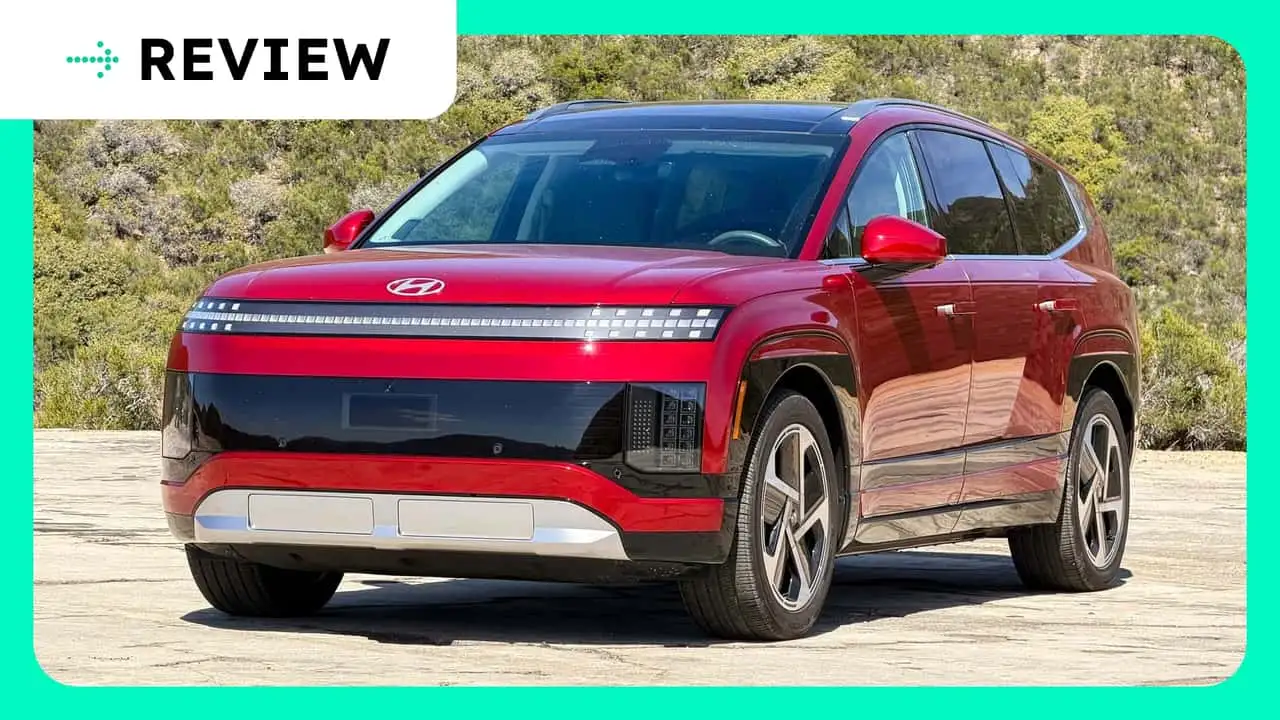
The 2026 Hyundai IONIQ 9 is Hyundai’s answer to that challenge.
It is a large, three-row electric SUV built around Hyundai’s E-GMP electric-vehicle platform. With a 110.3-kWh battery, up to 335 miles of EPA-estimated range in the U.S. and the ability to recharge from 10% to 80% in roughly 24 minutes on a suitable 350-kW charger, the IONIQ 9 has the numbers to compete seriously in the family-EV market.
But numbers only tell part of the story.
The more interesting question is whether the IONIQ 9 actually works as a family vehicle.
After looking at its design, space, charging capability, performance and everyday practicality, the answer is largely yes.
A different kind of Hyundai EV
The IONIQ 9 isn’t simply a larger version of the IONIQ 5 or IONIQ 6.
It occupies a very different part of the market.
This is a three-row SUV designed for people who need to carry several passengers and plenty of luggage without giving up the benefits of electric propulsion.
Hyundai says the vehicle can accommodate six or seven occupants, depending on configuration.
That makes it particularly interesting for families.
Instead of asking buyers to choose between an electric vehicle and a practical large SUV, Hyundai is attempting to combine both.
The size is immediately obvious
The IONIQ 9 measures:
- 5,060 mm long
- 1,980 mm wide
- 1,790 mm tall
- 3,130 mm wheelbase
That long wheelbase is particularly important.
Electric vehicles can make excellent use of their floor space because the battery sits beneath the passenger compartment rather than requiring a large conventional engine bay and transmission tunnel.
The result is a spacious cabin with a relatively flat floor.
And that is exactly what you want in a family SUV.
The interior is where the IONIQ 9 makes its strongest argument
A three-row SUV isn’t useful simply because it technically has three rows.
The real test is whether people can comfortably use all three.
Hyundai designed the IONIQ 9 around interior space, with the long wheelbase helping provide room for passengers and luggage.
The flat EV floor also makes moving around the cabin easier.
For families, that can be more important than acceleration figures.
Six or seven seats
Depending on configuration, buyers can choose between six- and seven-seat layouts.
The six-seat arrangement uses second-row captain’s chairs, creating a more open and premium feel.
The seven-seat version uses a second-row bench and focuses more heavily on maximum passenger capacity.
That gives the IONIQ 9 some flexibility that many smaller electric SUVs simply cannot offer.
The third row actually matters
This is one of the biggest reasons to consider the IONIQ 9.
Many SUVs advertise three rows but make the final row suitable only for children.
The IONIQ 9’s large body and long wheelbase give Hyundai considerably more freedom to create a usable third row.
That makes the vehicle much closer to a traditional large family SUV than many electric crossovers.
And there’s another advantage: silence
One of the first things passengers notice in a good EV is how quiet it is.
There is no conventional engine idling in traffic.
There are no traditional gear changes.
At low speeds, the cabin can feel remarkably calm.
For a family vehicle, that matters.
Parents can have conversations with passengers in the back without having to compete with engine noise.
Children can sleep.
And long-distance journeys can feel less tiring.
Three powertrain options
Hyundai offers the IONIQ 9 with three broad powertrain configurations.
The Long-Range RWD version uses a 160-kW rear motor.
The Long-Range AWD model adds a 70-kW front motor.
The Performance AWD version uses 160-kW motors at both the front and rear.
That gives customers a fairly wide range of performance options.
If efficiency and range are the priority, the rear-wheel-drive model makes the most sense.
If traction is more important, AWD is available.
And if performance matters, the dual-motor Performance version is considerably quicker.
It can be surprisingly quick
The Performance AWD model can accelerate from 0 to 100 km/h in approximately 5.2 seconds.
That’s impressive for a vehicle of this size.
The Long-Range AWD model takes around 6.7 seconds, while the Long-Range RWD version takes approximately 9.4 seconds.
In other words, you don’t necessarily have to sacrifice performance just because you’re buying a family SUV.
But performance isn’t really the point
This is an important distinction.
The IONIQ 9 isn’t designed primarily as a sports SUV.
Its biggest strengths are space, comfort, efficiency and practicality.
The Performance version is there for buyers who want additional acceleration.
For most families, however, the Long-Range RWD or AWD versions are likely to make more sense.
The 110.3-kWh battery is doing a lot of work
Every IONIQ 9 uses a 110.3-kWh battery pack.
That’s a substantial battery, but it is necessary for a vehicle this large.
Large SUVs have more weight and a larger frontal area than smaller EVs.
That means they generally require more energy to move.
Hyundai has attempted to offset some of that with aerodynamic design and an efficient electric platform.
Range is one of its biggest strengths
For the U.S. market, Hyundai currently lists an EPA-estimated range of up to 335 miles for the 2026 IONIQ 9 S with rear-wheel drive.
Other configurations have lower EPA estimates, including 320 miles for some trims and 311 miles for the higher-output AWD versions.
That’s enough range to make the IONIQ 9 a realistic long-distance vehicle.
In Europe, Hyundai quotes up to 620 km of WLTP range for the Long-Range RWD model with 19-inch wheels.
As always, real-world range will depend on speed, weather, temperature, driving style, wheel size, passenger load and other conditions.
Why the rear-wheel-drive version goes farther
There’s a straightforward reason.
The Long-Range RWD version uses one motor instead of two.
That reduces weight and drivetrain losses.
The version with 19-inch wheels also benefits from efficiency-focused specifications.
For buyers who care most about maximum range, this is likely to be the version to consider.
Aerodynamics matter more than you might think
The IONIQ 9 has an aerodynamic design that looks deliberately different from a conventional boxy SUV.
Hyundai reports a drag coefficient as low as 0.259 Cd in certain configurations.
That may not sound exciting, but aerodynamics become increasingly important as speed increases.
A large SUV has to push a significant amount of air out of its way.
Reducing aerodynamic drag means the motor doesn’t have to work as hard to maintain speed.
That can improve efficiency and therefore range.
Hyundai has even added active air flaps
The IONIQ 9 uses an active air-flap system designed to control airflow through the front of the vehicle.
When additional cooling isn’t necessary, the system can close to reduce aerodynamic resistance.
It’s another example of how EV manufacturers are finding efficiency gains in areas that might seem unrelated to the battery itself.
Charging is one of the IONIQ 9’s strongest features
The IONIQ 9 uses Hyundai’s 800-volt electrical architecture.
That is important because high-voltage systems can support very fast DC charging when the charging station and vehicle are capable of delivering it.
Hyundai says the IONIQ 9 can charge from 10% to 80% in about 24 minutes using a 350-kW DC charger under suitable conditions.
That’s a major advantage for road trips.
A large battery doesn’t necessarily mean long charging stops
This is where fast charging becomes important.
A 110.3-kWh battery sounds enormous compared with the batteries found in smaller EVs.
But if the charging system can replenish it quickly, the size becomes much less of a problem during long trips.
The IONIQ 9’s 800-volt architecture helps here.
The U.S. version also supports NACS
Hyundai’s current U.S. model uses a native NACS charging port, allowing owners to use compatible Tesla Supercharger locations without an adapter.
Hyundai lists approximately 40 minutes for a 10–80% charge on a NACS V3 Supercharger, compared with around 24 minutes on a suitable 350-kW charger using the CCS adapter.
That’s an important development for American EV buyers because access to reliable charging infrastructure is just as important as battery size.
Home charging is much slower — but that’s normal
Using a 240-volt Level 2 charger, Hyundai estimates roughly 9 hours and 40 minutes to charge from 10% to 100%.
For overnight charging, that’s perfectly reasonable.
Most owners aren’t going to arrive home with an empty battery every night.
A typical family could plug in after returning home and start the next morning with a substantially replenished battery.
Vehicle-to-load adds another useful feature
The IONIQ 9 supports V2L, or Vehicle-to-Load.
This allows the vehicle to supply electricity to external devices.
Hyundai says the system can provide up to 3.6 kW through the appropriate outlets.
That could be useful for:
- Camping
- Outdoor events
- Powering equipment
- Charging electronics
- Emergency backup applications
For markets where electricity reliability is a concern, V2L could be particularly interesting.
This is where the IONIQ 9 becomes more than a family car
The ability to use an EV as a mobile power source changes how people can think about the vehicle.
Instead of electricity flowing only from the grid into the car, energy can also flow from the car to equipment.
That creates opportunities for EVs to become part of a wider energy ecosystem.
Comfort is arguably more important than speed
A large family SUV spends much of its life doing ordinary things.
School runs.
Shopping.
Commuting.
Airport trips.
Weekend journeys.
Long highway drives.
Those situations don’t require 5-second acceleration.
They require a comfortable cabin, good visibility, plenty of storage and predictable charging.
That’s where the IONIQ 9 makes the most sense.
The interior design is deliberately calming
Hyundai has taken a relatively minimalist approach to the cabin.
The goal isn’t simply to fill the dashboard with screens.
Instead, the IONIQ 9 attempts to create a spacious environment that feels more like a comfortable lounge than a traditional SUV cockpit.
The long wheelbase helps make that possible.
It also looks expensive
The IONIQ 9’s exterior design is distinctive.
It doesn’t try to look like a conventional petrol SUV with the engine removed.
Instead, Hyundai has used the freedom of an EV platform to create a more aerodynamic shape.
That gives it a strong road presence without relying entirely on aggressive styling.
But the size can be a disadvantage
There is no escaping physics.
The IONIQ 9 is a large vehicle.
At 5.06 metres long and nearly two metres wide, it can be challenging in tight urban environments.
Parking spaces, narrow streets and crowded shopping areas can all become more difficult.
For buyers living in dense cities, a smaller EV may simply be easier to live with.
It’s also a lot of car
The IONIQ 9 isn’t the kind of EV you buy because you occasionally need seven seats.
It’s a vehicle designed around having lots of space.
If you normally travel alone or with one other person, a smaller EV will probably be more efficient and easier to park.
But for a large family, the equation changes.
Efficiency is the compromise
A large electric SUV can be efficient compared with a similarly sized petrol SUV, but that doesn’t mean it consumes as little electricity as a smaller EV.
The IONIQ 9’s size, weight and large battery all contribute to its energy requirements.
The aerodynamic design helps offset those disadvantages.
But if maximum efficiency is your only priority, this isn’t the vehicle to buy.
The IONIQ 9’s real competition
The IONIQ 9 enters an increasingly competitive part of the EV market.
Its most obvious rivals include large electric SUVs such as:
- Kia EV9
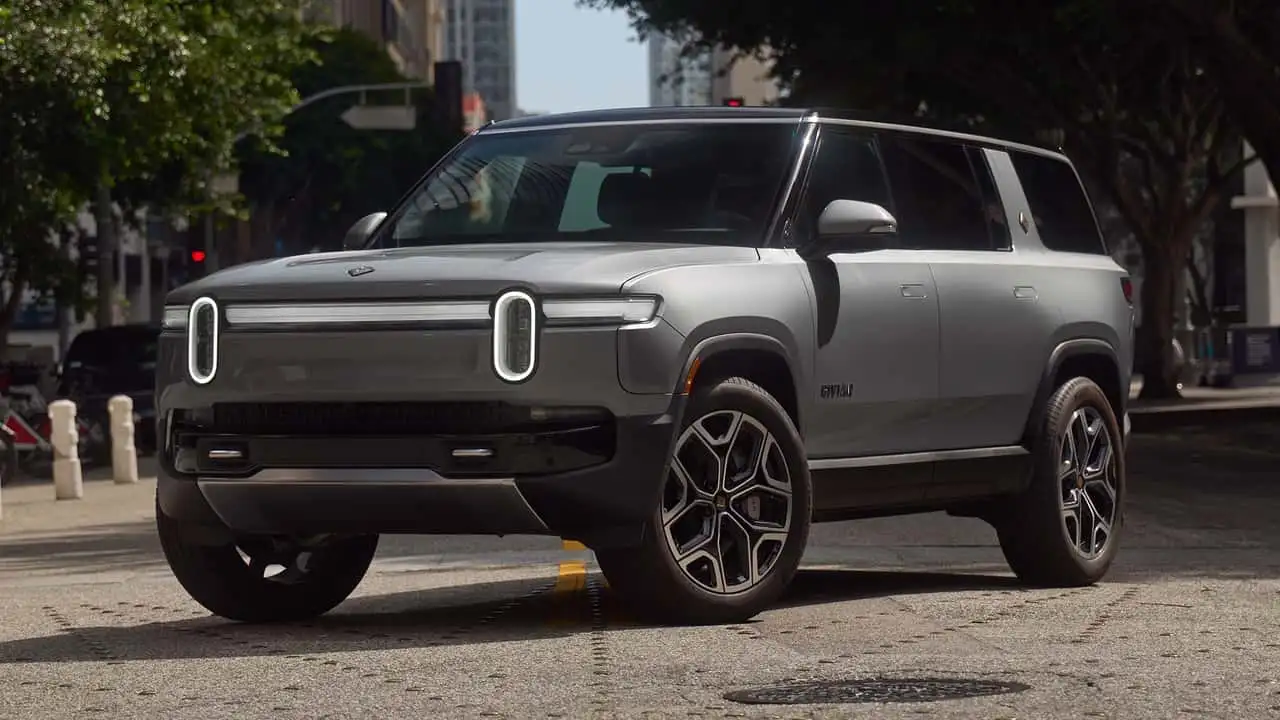
- Rivian R1S
- Volvo EX90
- Lucid Gravity
- Tesla Model X
Each takes a slightly different approach.
The Hyundai’s advantage is the combination of large interior space, 800-volt charging, strong range figures and a relatively conventional SUV format.
It shares technology with the Kia EV9
The IONIQ 9 and Kia EV9 come from the same broader Hyundai Motor Group family and use related E-GMP architecture.
But Hyundai has given the IONIQ 9 its own identity.
The two vehicles are therefore competitors as much as they are technological relatives.
For families comparing the two, factors such as pricing, interior layout, charging access and local availability could be more important than small differences in specifications.
The IONIQ 9 is not trying to be a sports car
And that’s okay.
There’s a tendency in EV marketing to focus heavily on acceleration.
But family buyers often care about completely different things.
They want:
Space.
Comfort.
Range.
Charging speed.
Reliability.
Safety.
Running costs.
The IONIQ 9 is designed around those priorities.
So, does it get family life right?
For the most part, yes.
Its greatest strength is that Hyundai didn’t try to make a three-row SUV small simply to make it look efficient.
Instead, the company embraced the vehicle’s size and used the EV platform to create a spacious cabin.
That makes the IONIQ 9 feel purpose-built for families.
The biggest strengths
1. Excellent interior space
The long wheelbase and flat EV floor create a cabin designed around passenger comfort.
2. Strong range
The U.S. model reaches up to 335 EPA-estimated miles, while Hyundai quotes up to 620 km WLTP for the most efficient European configuration.
3. Very fast charging
The ability to go from 10% to 80% in approximately 24 minutes on a suitable 350-kW charger is one of its strongest selling points.
4. Multiple powertrains
Buyers can choose between rear-wheel drive, long-range AWD and Performance AWD.
5. Genuine three-row practicality
The IONIQ 9 is designed as a family vehicle rather than a five-seat SUV with two emergency seats added at the back.
The biggest weaknesses
1. It’s huge
The dimensions can be a problem in tight urban environments.
2. It’s heavy
Large batteries and three-row SUV dimensions inevitably add weight.
3. Charging infrastructure still matters
The impressive 24-minute charging figure assumes access to an appropriate high-power charger.
You won’t get that speed from every public charger.
4. Range depends heavily on configuration
The maximum range applies to specific configurations.
More powerful AWD versions have lower EPA range ratings.
5. It won’t be cheap
This is a large, technologically advanced electric SUV.
The U.S. model currently starts at $58,955 before freight charges and other applicable costs, according to Hyundai.
Higher trims cost considerably more.
What about Nigeria and other African markets?
This is where the IONIQ 9 becomes particularly interesting — but also complicated.
A large electric SUV could make sense for families and businesses that want a premium vehicle without relying on petrol.
But EV ownership in many African markets is still heavily influenced by charging infrastructure.
A vehicle capable of 24-minute charging is only as useful as the charger available to you.
If a driver has access to reliable home charging, the experience can be much easier.
If they depend entirely on public charging, planning becomes more important.
Home charging could be the key
For an EV like the IONIQ 9, home charging can fundamentally change ownership.
Instead of visiting a petrol station every few days, the owner can simply plug the vehicle in when returning home.
For someone with reliable electricity and an appropriate charging installation, that can be extremely convenient.
Electricity reliability matters
In markets where grid reliability varies, however, EV ownership requires additional planning.
Home solar, battery storage or backup generation can potentially make charging more predictable.
This is one reason the IONIQ 9’s V2L capability is particularly interesting for markets outside North America and Europe.
The vehicle itself can become another source of electricity for certain applications.
The bigger picture
The IONIQ 9 demonstrates something important about the EV market.
Electric vehicles aren’t limited to small city cars.
Manufacturers are now building large, comfortable, long-distance SUVs with three rows of seats and substantial towing and family-transport potential.
That broadens the market considerably.
Hyundai has built an EV for people who don’t want a compromise
That’s probably the best way to describe the IONIQ 9.
It doesn’t ask a family to accept a tiny cabin in exchange for going electric.
It doesn’t make long-distance travel impossible.
And it doesn’t sacrifice performance simply because practicality is the priority.
Instead, it attempts to combine the best qualities of a large SUV with the strengths of a modern EV.
GoGreenway verdict
The 2026 Hyundai IONIQ 9 is one of the more convincing examples of how electric vehicles can work for large families.
Its 110.3-kWh battery, three-row interior, available six- or seven-seat configurations, strong range and 800-volt charging system give it a compelling combination of practicality and technology.
The headline numbers are impressive, but they’re not the main reason the IONIQ 9 stands out.
The real achievement is that Hyundai has built an electric SUV around how families actually use large vehicles.
Passengers need room.
Luggage needs somewhere to go.
Long trips need dependable range.
And charging stops need to be as painless as possible.
The IONIQ 9 addresses all four.
It’s still a very large and expensive vehicle, and its real-world usefulness will depend heavily on charging infrastructure in each market.
But as an electric alternative to the traditional three-row family SUV, the IONIQ 9 makes a strong case for itself.
Our verdict: 8.5/10
Best for: Large families, long-distance EV drivers and buyers who want three rows without giving up fast charging.
Not ideal for: Drivers who mostly travel alone, live in areas with limited charging infrastructure or want a compact urban vehicle.
Sources
- Hyundai Motor Group — IONIQ 9 overview and specifications
- Hyundai USA — 2026 IONIQ 9 specifications
- Hyundai USA — 2026 IONIQ 9 overview, pricing, range and charging
- Hyundai Europe — IONIQ 9 range and charging
- Hyundai Motor — IONIQ 9 technical specifications