By Jacob Franklin
China’s electric vehicle industry has found a new number to compete over: megawatts.
Dongfeng Motor has unveiled a new ultra-fast EV charging system capable of delivering up to 1,500 kW — or 1.5 megawatts — through a single charging connector.
That puts Dongfeng directly alongside BYD, whose latest Flash Charging system also reaches 1,500 kW.
But Dongfeng isn’t stopping there.
The company says its modular charging technology can be expanded to 2.4 MW and beyond, while future versions will incorporate energy storage to help overcome limitations from the electrical grid.
The development is another sign that China’s EV industry is moving rapidly toward charging speeds that could eventually make a short charging stop feel much closer to the experience of filling a petrol car.
Dongfeng’s charger reaches 1,500 kW
Dongfeng unveiled the new charging system on July 29 at its Global Innovation Center in China.
The company describes it as its first fully self-developed high-power charging product.
Its headline specification is impressive:
1,500 kW of peak power from a single charging gun.
The system supports currents of up to 1,500 amps and operates across a very wide voltage range of 150 to 1,000 volts. Dongfeng says overall system efficiency is at least 96.7%.
Those figures place the charger among the most powerful EV charging systems currently being developed for passenger and commercial vehicles.
But 1.5 MW doesn’t mean every EV can charge at 1.5 MW
This is an important distinction.
A charging station’s maximum output isn’t the same thing as the charging speed of the vehicle connected to it.
Think of the charger as a very large water pipe.
Having an enormous pipe doesn’t mean every vehicle can accept water at the maximum possible rate.
The EV determines how much electricity it can actually receive.
Its battery voltage, maximum current, battery chemistry, thermal-management system and charging software all play a role.
For example, an EV with an 800-volt system cannot simply be assumed to draw 1,500 kW because it is connected to a 1,500-kW charger.
The vehicle has to be engineered for that level of power.
The numbers tell an interesting story
The relationship between voltage, current and power is straightforward:
Power = Voltage × Current
At 1,000 volts and 1,500 amps, the theoretical maximum is:
1,000 V × 1,500 A = 1,500,000 W
That’s where Dongfeng gets its 1.5 MW figure.
But maintaining those kinds of electrical loads creates enormous engineering challenges.
Heat becomes a major concern.
The charging cable has to handle huge currents.
The charging equipment needs sophisticated cooling and power electronics.
And, perhaps most importantly, the vehicle’s battery needs to be capable of accepting that energy.
Dongfeng’s system uses a 1.2 MW main unit
Interestingly, the charging station’s main power unit is rated at 1.2 MW.
Dongfeng’s modular architecture allows additional power cabinets to be connected, increasing the total available power to 2.4 MW or more.
That modular approach could become increasingly important as charging networks grow.
Instead of installing an enormous power system from the beginning, operators could potentially increase capacity as demand increases.
Dongfeng is already planning 2.4 MW charging
The 1.5-MW system isn’t supposed to be the end of the story.
Dongfeng says it is developing a broader charging product family ranging from 720 kW to 2.4 MW.
The systems are intended to support both passenger cars and commercial vehicles.
That distinction matters.
Commercial EVs, particularly electric trucks and other heavy-duty vehicles, have much larger batteries than passenger cars.
They therefore have much more to gain from extremely high charging power.
A truck that needs hundreds of kilowatt-hours of energy can’t afford to spend hours connected to a charger during a commercial operation.
Energy storage could be the real breakthrough
One of Dongfeng’s most interesting announcements isn’t actually the 1.5-MW charger.
It’s what comes next.
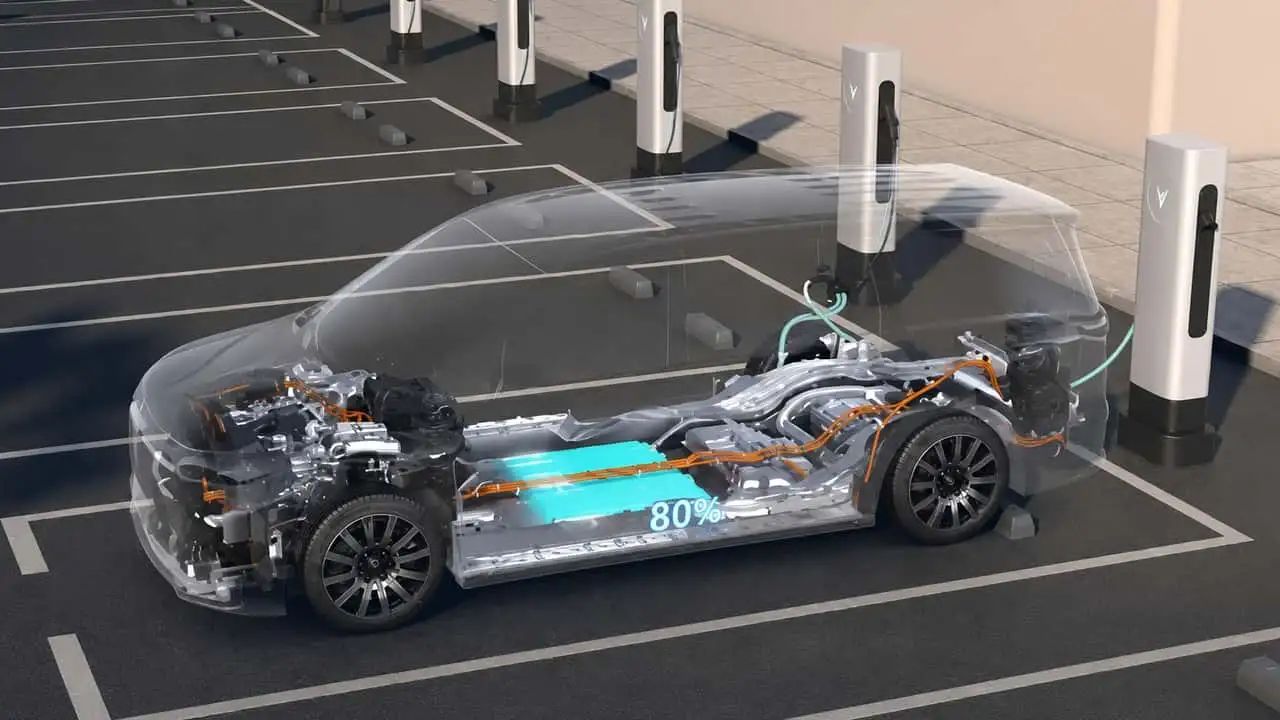
The company says it is developing ultra-fast chargers with integrated energy storage.
Why does that matter?
Because the electrical grid doesn’t necessarily have to provide the full charging power instantaneously.
A battery system at the charging station can gradually collect electricity from the grid and then release it rapidly when an EV arrives.
In simple terms:
Grid → charging station battery → EV
instead of:
Grid → EV
That could make megawatt charging easier to deploy in locations where the electricity network cannot comfortably provide such enormous instantaneous power.
The grid could become the biggest obstacle
This is one of the less glamorous sides of ultra-fast charging.
It’s relatively easy to announce a 1,500-kW charger.
Building the electrical infrastructure required to operate hundreds or thousands of them is much harder.
Imagine a charging station with several vehicles simultaneously demanding hundreds of kilowatts.
The electricity demand can quickly become enormous.
That means future charging networks will need:
- High-voltage grid connections
- Large transformers
- Advanced power electronics
- Energy storage
- Thermal management
- Smart load balancing
- Reliable electricity supply
The charger itself is only one part of the infrastructure.
China’s charging race is intensifying
Dongfeng isn’t operating in isolation.
Chinese automakers are increasingly competing over how quickly their EVs can recharge.
BYD made headlines earlier this year with its second-generation Flash Charging system, also rated at 1,500 kW. The company paired the technology with its second-generation Blade Battery and said compatible vehicles could charge from 10% to 70% in about five minutes under suitable conditions.
BYD has also announced plans to build 20,000 Flash Charging stations in China by the end of 2026.
That puts considerable pressure on competitors.
Dongfeng’s response shows just how quickly the technology race is developing.
It’s no longer just about bigger batteries
For years, one of the easiest ways for an automaker to make an EV more attractive was to install a larger battery.
More battery means more range.
But there is a downside.
Bigger batteries are heavier.
They cost more.
They require more raw materials.
And they don’t necessarily solve charging anxiety.
Ultra-fast charging offers another approach.
Instead of giving every EV an enormous battery, manufacturers can try to make the battery much faster to replenish.
A 10-minute charging stop could change EVs
Imagine driving a long-distance trip.
You arrive at a charging station with 10% battery.
You connect the vehicle.
Instead of waiting 30–40 minutes, you spend roughly 10 minutes buying a drink or using the restroom.
Then you continue driving.
That is a very different experience from the early generation of EVs.
And it could remove one of the biggest psychological barriers to EV adoption.
But there’s a big difference between charger power and charging time
It’s important not to turn the 1.5-MW figure into an unrealistic claim.
A 1,500-kW charger does not automatically mean a five-minute charge for every EV.
The vehicle must be capable of accepting that power.
The battery must be at the right temperature.
The charging station must actually be able to provide the power.
And the charging curve will determine how long the vehicle can sustain high power.
This is why headline charging numbers should always be treated carefully.
The charging curve matters
Just as we discussed with the Zeekr 7GT, peak power isn’t everything.
An EV might briefly reach 1,000 kW and then rapidly reduce its charging rate.
Another vehicle might charge at 600–700 kW for considerably longer.
The second car could potentially complete the charging session sooner.
That’s why future EV comparisons should increasingly look at:
- 10–80% charging time
- Average charging power
- Peak charging power
- Charging curve
- Range added per minute
- Battery temperature
- Charger availability
The headline number is only one piece of the puzzle.
Dongfeng is also developing higher-voltage technology
The charging announcement came alongside another important Dongfeng technology.
The company unveiled its iD5-300SN, its first kilovolt-class electric drive system.
The system uses a 1,500-volt-rated silicon-carbide power module and operates between 450 and 1,000 volts, with the ability to extend to 1,200 volts. It delivers up to 300 kW of peak power.
That is important because ultra-fast charging requires the vehicle itself to evolve alongside the charger.
You can’t simply install a more powerful charging station and expect every existing EV to suddenly charge faster.
The vehicle architecture has to keep up.
Silicon carbide plays a role
Dongfeng’s new electric drive uses silicon-carbide, or SiC, power electronics.
SiC components can offer advantages in high-power applications, including improved efficiency and reduced losses compared with traditional silicon-based components.
Dongfeng says the new drive has 30% higher power density than its previous generation.
The company plans to use the technology in its Mach powertrain family and in the first kilovolt-architecture model from its Epicland brand, which is being developed with Huawei.
Why 1,000 volts matters
Most modern fast-charging EVs already use high-voltage electrical architectures.
800-volt systems are becoming increasingly common in premium and performance-oriented EVs.
Moving toward 1,000 volts and beyond allows manufacturers to achieve extremely high power without pushing current to even more extreme levels.
Again, the basic relationship is:
Higher voltage × current = higher power
If you want huge charging power without infinitely increasing current, increasing voltage is one of the solutions.
Commercial vehicles could benefit enormously
Passenger cars get most of the attention when we talk about EV charging.
But commercial vehicles may ultimately be where megawatt charging has the greatest economic impact.
Consider an electric delivery truck.
Every minute it spends charging is potentially a minute it isn’t delivering goods.
The same applies to:
- Electric buses
- Heavy trucks
- Mining vehicles
- Construction equipment
- Logistics fleets
For these vehicles, charging time isn’t simply a convenience issue.
It affects business productivity.
Megawatt charging could make electric trucks more practical
Heavy-duty electric trucks have much larger batteries than passenger vehicles.
A truck may need hundreds of kilowatt-hours or even more depending on its application.
Charging such a battery at 100 kW could take hours.
Charging at 1 MW changes the equation dramatically.
Of course, the vehicle must be designed for it.
The charger must support it.
And the grid must be able to supply it.
But the potential is enormous.
This is where energy storage becomes particularly useful
A charging station serving trucks could combine megawatt charging with stationary batteries.
During periods of low demand, the station could slowly recharge its own energy-storage system.
When a truck arrives, that stored energy could be released rapidly.
That could reduce the instantaneous burden on the grid.
It’s an approach that could become increasingly important as charging power moves into the megawatt range.
Is this technology coming to Africa?
Eventually, probably.
But the priorities will be different.
For markets such as Nigeria, the biggest EV infrastructure challenge isn’t necessarily whether a charger can deliver 1,500 kW.
It’s whether there is a reliable electricity supply and enough EV demand to justify the investment.
A 1.5-MW charger is impressive.
But if the local grid is unstable, the charger cannot operate at its potential.
That means Africa’s EV transition will require investment at several levels:
Generation → transmission → distribution → charging infrastructure → vehicles
You can’t skip the earlier stages.
Nigeria could benefit from smarter charging infrastructure
For Nigeria, the most useful lesson from Dongfeng may therefore not be the 1.5-MW number.
It may be the idea of integrating energy storage with fast charging.
A charging station with its own battery storage could potentially draw electricity from the grid more gradually and then provide high-power charging when needed.
Combined with solar generation, this could create a more resilient charging system in locations where grid reliability is a concern.
That doesn’t mean every Nigerian charging station needs a megawatt charger.
Far from it.
It means infrastructure needs to be designed around local electricity conditions.
Ultra-fast charging won’t replace home charging
Another misconception is that extremely fast chargers will make home charging irrelevant.
They won’t.
For most EV owners, overnight charging at home will remain the most convenient option when available.
You don’t need a 1,500-kW charger when your car is parked for eight hours.
Ultra-fast charging is primarily valuable when:
- You’re travelling long distances
- You need a quick top-up
- You’re operating a commercial fleet
- You’re between destinations
That’s why a mature charging network will likely include different levels of charging.
The future could be a mixture of charging speeds
We may eventually have:
Slow AC charging at home
Medium-speed destination charging
Fast DC charging in cities
Ultra-fast charging on highways
Megawatt charging for commercial vehicles
Each serves a different purpose.
The mistake would be assuming that every charger needs to be the fastest possible.
There’s also a cost issue
High-power charging infrastructure isn’t cheap.
The equipment itself is more sophisticated.
The grid connection can be expensive.
Transformers and switchgear become larger.
Cooling systems become more important.
And energy storage adds another significant cost.
The economics therefore need to make sense.
A 1.5-MW charger sitting unused most of the day isn’t necessarily a good investment.
Utilisation will become increasingly important
Charging companies will need to determine where ultra-fast chargers actually make financial sense.
Highway corridors are obvious candidates.
Busy urban charging hubs could also work.
Commercial depots are another strong opportunity.
But putting megawatt chargers everywhere simply because the technology exists would be inefficient.
Infrastructure has to follow demand.
China has an advantage here
China is particularly well positioned to experiment with ultra-fast charging because its EV market is already enormous.
Large numbers of electric vehicles create demand.
High vehicle volumes create data.
Domestic battery manufacturers can develop compatible batteries.
Automakers can design vehicles around the charging infrastructure.
And charging companies can deploy equipment at scale.
That creates a feedback loop.
More EVs → more chargers → more investment → better charging → more EV adoption.
The charging arms race is becoming a battery arms race too
There’s another interesting consequence.
As charging stations become more powerful, automakers need batteries that can accept that power safely.
That means charging competition is pushing battery technology forward.
We’ve already seen this with new LFP batteries capable of accepting extremely high charging rates.
The next generation of batteries may be designed from the beginning around ultra-fast charging rather than treating it as an additional feature.
The question is no longer “Can EVs charge quickly?”
It’s becoming:
How quickly can an EV charge without compromising battery life, efficiency, cost and infrastructure requirements?
That’s a much harder engineering problem.
A 1.5-MW charger solves only one part of it.
The vehicle still needs the right battery.
The battery needs the right thermal management.
The electrical system needs the right voltage.
And the grid needs to support the charger.
Dongfeng’s announcement is still significant
Even with those caveats, Dongfeng’s announcement matters.
The company has now joined the 1.5-MW charging club.
Its charger matches the peak output of BYD’s latest Flash Charging hardware.
More importantly, Dongfeng is already planning a broader portfolio reaching 2.4 MW and beyond.
That suggests the current 1.5-MW figure may eventually look relatively ordinary.
The charging race could soon reach another level
If 1.5 MW becomes common, the next question will be whether 2 MW charging becomes practical for passenger vehicles.
But there are limits.
At some point, increasing charging power provides diminishing returns.
A vehicle may only be able to absorb energy so quickly.
The infrastructure becomes increasingly expensive.
And the battery becomes harder to manage thermally.
So the future isn’t necessarily about continuously increasing the number.
It is about finding the point where charging is fast enough without making everything else unnecessarily complicated.
GoGreenway’s verdict
Dongfeng’s 1.5-MW charger is another sign that the EV industry is moving into a new era.
The headline figure is enormous.
1,500 kW from a single charging connector.
But the more interesting development may be the technology underneath it.
Dongfeng has designed a modular system with a 1.2-MW main unit, the ability to expand to 2.4 MW or more, a 150–1,000-volt operating range and up to 1,500 amps.
The company is also working on charging systems with integrated energy storage.
That could be particularly important because the biggest challenge with megawatt charging may eventually be the electricity grid rather than the charger itself.
For EV drivers, the promise is obvious: charging stops measured in minutes rather than tens of minutes or hours.
For automakers, however, the challenge is much harder.
They need batteries, thermal systems and electrical architectures capable of taking advantage of that power.
And for countries such as Nigeria, there is an even bigger lesson.
Ultra-fast charging is only as useful as the electricity infrastructure supporting it.
The next phase of the EV revolution won’t simply be a race to build faster cars.
It will be a race to build better batteries, smarter chargers and stronger electricity networks at the same time.
And China is currently pushing all three forward at remarkable speed.
Sources
- Dongfeng official announcement — specifications for the 1.5-MW charger, 2.4-MW expansion, 1,500 A current and 96.7% efficiency.
- Electrive — independent reporting on the 1.5-MW system and Dongfeng’s 720-kW to 2.4-MW charging roadmap.
- InsideEVs — useful independent explanation of what the 1.5-MW rating actually means for an individual EV.
- CnEVPost — coverage of Dongfeng’s charging technology and the wider Chinese charging competition.
- Electrifying — additional independent coverage of the charger and its future energy-storage capability.