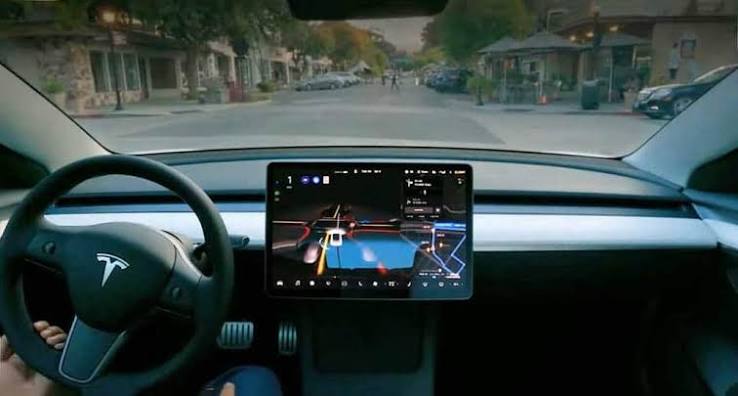
Tesla’s Full Self-Driving software has been getting progressively more sophisticated, but one of the most important improvements isn’t necessarily something drivers can see on the screen.
It’s how quickly the system reacts when something unexpected happens.
A recent real-world test involving several Tesla vehicles attempted to put that ability to the test.
The results were striking.
A Tesla running newer FSD software on the company’s newer Hardware 4 computer reportedly reacted 57.8% faster than an older Tesla running FSD v12.6.4 on Hardware 3.
Even more interestingly, a Tesla using the older Hardware 3 computer but upgraded to FSD v14 Lite reacted 36.6% faster than the same hardware running the older software.
That suggests software improvements alone can make a measurable difference.
But there is an important catch.
This was an independent test, not an official Tesla safety benchmark or a controlled regulatory test.
So what exactly did the experiment demonstrate?
The test was designed to measure reaction time
The experiment was carried out by YouTuber TechGeek Tesla, who developed a setup capable of pulling a dummy into the path of an approaching Tesla.
The idea was relatively straightforward.
A vehicle would approach at a controlled speed while operating under Full Self-Driving.
At a predetermined moment, a dummy would suddenly move into the vehicle’s path.
Telemetry equipment was then used to measure the time between the dummy beginning to move and the Tesla initiating braking or a steering response.
That makes the test interesting because human observers often struggle to estimate differences of only a few tenths of a second.
A measurement system can detect those differences much more precisely.
The results showed a significant difference
The comparison involved different combinations of Tesla’s hardware and software.
According to the test results:
| Tesla configuration | Relative reaction performance |
|---|---|
| HW4 + FSD v14.3 | Fastest |
| HW3 + FSD v14 Lite | 36.6% faster than HW3 + v12.6.4 |
| HW3 + FSD v12.6.4 | Slowest |
The HW4 vehicle running v14.3 reportedly reacted 57.8% faster than the HW3 vehicle running v12.6.4.
Those numbers are impressive.
But they need context.
Faster doesn’t automatically mean safer
This is probably the most important point.
A faster reaction time is generally desirable when a genuine hazard appears.
But vehicle safety is much more complicated than reaction speed.
A system also needs to:
- Correctly identify the object
- Understand whether it represents a danger
- Predict how the object will move
- Decide whether to brake or steer
- Select an appropriate response
- Execute that response safely
- Avoid creating another hazard
A system that reacts extremely quickly to the wrong object isn’t necessarily safer.
That’s why the test should be viewed as evidence about responsiveness, rather than proof of overall safety.
The software improvement is particularly interesting
The most revealing comparison may actually be the one involving the same hardware.
HW3 with FSD v14 Lite was reportedly 36.6% faster than HW3 with v12.6.4.
That matters because neither vehicle had the newer Hardware 4 computer.
The difference was primarily the software version.
In other words, the experiment suggests that Tesla can extract meaningful performance improvements from existing hardware through software updates.
That’s important for Tesla owners.
Why Hardware 4 matters
Tesla has used different generations of computing hardware in its vehicles.
Hardware 3, commonly known as HW3, was designed specifically to support Tesla’s advanced driver-assistance systems.
Hardware 4 is newer and provides more computing and sensing capability.
That difference matters because increasingly sophisticated AI models require substantial computational resources.
Tesla therefore faces a difficult balancing act:
Improve the software while supporting older vehicles.
Tesla is trying to keep older cars relevant
This is particularly important for owners of HW3-equipped Teslas.
Many older vehicles cannot simply receive every new feature at exactly the same performance level as newer vehicles.
Tesla has therefore developed versions such as FSD v14 Lite for older hardware.
The reported reaction-time improvement is evidence that Tesla can still improve the behaviour of older systems through software.
But it doesn’t mean older hardware suddenly becomes equivalent to HW4.
The test itself demonstrates that newer hardware and software combination remained the fastest.
What exactly is FSD?
Despite its name, Tesla’s Full Self-Driving (Supervised) system should not be confused with a vehicle that can legally and reliably drive everywhere without human supervision.
That’s an important distinction.
Current Tesla FSD is generally described as a Level 2 driver-assistance system in which the human driver remains responsible for supervising the vehicle.
Recent reporting has highlighted that some Tesla drivers have become increasingly reliant on the technology, even though the system still requires supervision.
So when we talk about FSD “reacting” to an obstacle, we’re talking about an advanced driver-assistance system — not a system that removes the human from responsibility.
FSD v14 has been getting smoother
The reaction-time test isn’t the only evidence of improvement.
Independent driving reviews of FSD v14 have reported smoother behaviour compared with earlier versions.
One Australian test of FSD v14 found improvements in the beginning and ending of journeys, along with new driving-speed profiles such as Sloth, Chill, Standard and Hurry.
Another extended test of FSD v14 described it as an impressive Level 2 system while still noting that it remains far from Tesla’s long-standing promise of fully unsupervised driving.
So the broader trend appears to be toward smoother and more capable driver assistance.
Tesla says its software is improving through AI training
One of Tesla’s biggest advantages is the enormous amount of driving data generated by its vehicles.
The company’s approach relies heavily on neural networks trained using data collected from its fleet.
The basic idea is straightforward:
More vehicles generate more driving data.
More data can provide more examples of unusual road situations.
Those examples can then be used to improve the software.
That doesn’t automatically guarantee safe performance.
But it gives Tesla a potentially powerful feedback loop.
Real roads are incredibly complicated
This is where autonomous driving becomes difficult.
A test dummy appearing in a predictable location is useful for measuring one specific capability.
Real roads are far more chaotic.
A pedestrian could suddenly run into the road.
A cyclist could change direction.
A motorcycle could filter between lanes.
A vehicle could stop unexpectedly.
An emergency vehicle could approach from an unusual angle.
A road could suddenly become blocked.
Construction could change the normal lane layout.
Rain could reduce visibility.
A traffic officer could override normal traffic signals.
The challenge isn’t simply reacting quickly.
It’s understanding what is happening.
That’s why one reaction test isn’t enough
The TechGeek Tesla experiment is valuable because it attempts to quantify something that is normally difficult to measure.
But it doesn’t tell us how FSD performs across every possible driving scenario.
It doesn’t establish:
- Accident rates
- Pedestrian safety
- Performance in rain
- Performance in snow
- Performance around emergency vehicles
- Performance around children
- Long-term reliability
- System failure rates
- Overall safety compared with human drivers
Those require much larger datasets and carefully controlled testing.
Tesla’s own safety claims have faced scrutiny
This is another reason GoGreenway should avoid overstating the results.
Tesla has made strong claims about the safety of its driver-assistance technology.
But those claims have faced scrutiny from regulators, safety researchers and journalists.
A recent Reuters investigation reported concerns from Tesla AI trainers and former employees regarding some FSD failures and questioned aspects of Tesla’s safety comparisons.
That doesn’t mean FSD cannot improve.
It means claims about its safety should be evaluated independently.
Reaction time is still an important metric
With that caveat in mind, reaction time remains useful.
Imagine two identical cars travelling at the same speed.
One system detects a hazard and begins responding earlier.
The vehicle has more time to:
- Brake
- Change direction
- Reduce impact speed
- Avoid the obstacle entirely
Every fraction of a second can matter.
But the system must first understand what it is seeing.
How much difference can a fraction of a second make?
At highway speeds, a vehicle can travel a surprisingly large distance in a fraction of a second.
At 100 km/h, a vehicle travels about 27.8 metres every second.
That means:
- 0.1 seconds ≈ 2.8 metres
- 0.2 seconds ≈ 5.6 metres
- 0.5 seconds ≈ 13.9 metres
- 1 second ≈ 27.8 metres
So shaving even a few tenths of a second from a response can potentially create additional space for braking or avoidance.
That’s why researchers and engineers pay attention to system latency.
But reaction time isn’t the same as stopping distance
This distinction is important.
Even if an AI system responds instantly, the vehicle still needs time to slow down.
Stopping distance depends on:
- Vehicle speed
- Tyres
- Road surface
- Weather
- Brake condition
- Vehicle mass
- Brake system
- Driver or software response
- Available traction
A faster software response can reduce the delay before braking begins.
It doesn’t eliminate physics.
The HW4 advantage could become increasingly important
As Tesla develops more sophisticated AI models, computational requirements are likely to increase.
That creates a potential divide between older and newer Tesla vehicles.
HW4 vehicles have more capable computing hardware than HW3.
If future software requires more processing power, older vehicles could eventually become increasingly constrained.
The v14 Lite experiment shows Tesla is still finding ways to improve HW3.
But it also highlights the importance of hardware.
Software can improve hardware — up to a point
This is a useful lesson beyond Tesla.
Modern vehicles increasingly resemble computers on wheels.
Software updates can improve:
- Perception
- Navigation
- Planning
- Energy management
- Driver assistance
- User interfaces
But software cannot completely overcome hardware limitations.
If a computer doesn’t have enough processing power, memory or sensor capability, there are limits to what software can accomplish.
Tesla’s strategy is different from Waymo’s
Tesla isn’t the only company pursuing autonomous driving.
Waymo has taken a different approach.
Waymo operates vehicles with much higher levels of automation in defined areas, whereas Tesla’s consumer FSD strategy has historically focused on deploying driver assistance at enormous scale.
Recent reporting highlights the difference: Waymo has accumulated far more driverless miles in its operational service than Tesla’s newer unsupervised robotaxi deployments.
The two companies are therefore pursuing somewhat different strategies.
Tesla wants scale
Tesla’s approach depends heavily on putting its software into a large number of consumer vehicles.
Every Tesla equipped with the relevant technology becomes a potential source of driving data.
That gives Tesla a scale advantage.
The challenge is making sure that scale doesn’t come at the expense of safety.
The robotaxi question makes this even more important
Tesla’s ambitions go beyond driver assistance.
The company is pursuing robotaxi technology, including the upcoming Cybercab.
That raises the bar considerably.
A human driver can compensate for a system’s mistake.
A genuinely autonomous vehicle cannot depend on a human being ready to intervene.
That’s why the difference between FSD Supervised and fully autonomous driving is so important.
A supervised system has a safety net
With supervised FSD, the human is expected to monitor the road and intervene when necessary.
That means the system doesn’t have to solve every possible road situation perfectly.
But that also creates a human-factors problem.
If drivers become too confident in the software, they may pay less attention.
Recent reporting has highlighted exactly that concern, with some Tesla users relying heavily on FSD despite the system’s Level 2 classification.
The better FSD becomes, the harder this problem may become
This sounds contradictory.
But imagine a system that performs badly.
The driver is likely to remain alert because they expect mistakes.
Now imagine a system that performs extremely well for hundreds of kilometres.
The driver may become comfortable.
They may stop paying as much attention.
That creates the possibility of automation complacency.
So improving FSD isn’t simply a technical challenge.
It’s also a human-behaviour challenge.
What the reaction test really tells us
The most defensible conclusion from the recent test is relatively simple:
Tesla’s newer FSD software appears capable of responding faster to a sudden obstacle than older versions tested on the same or older hardware.
That’s useful.
It’s measurable.
And it provides evidence that software development is producing tangible improvements.
But it does not prove that FSD is 57.8% safer.
It does not prove that Tesla vehicles are safer than human drivers.
And it does not prove that Tesla has solved autonomous driving.
That’s actually what makes the test interesting
We don’t need to exaggerate the findings.
A 36.6% improvement on the same HW3 platform is already significant enough to discuss.
It demonstrates that software optimisation can make a measurable difference.
And the 57.8% difference between the older HW3/v12.6.4 combination and the newer HW4/v14.3 setup shows how both hardware and software can contribute to performance.
What Tesla owners should take from this
If you own a Tesla equipped with FSD, the biggest takeaway isn’t that you can now stop paying attention.
Quite the opposite.
The technology may be getting faster and more capable.
But the driver remains responsible for supervising the system where required.
Software updates should therefore be viewed as improvements to a driver-assistance system, not permission to treat the vehicle as a human-free chauffeur.
And what about older Teslas?
Owners of HW3 vehicles have reason to be interested in FSD v14 Lite.
The independent testing suggests that newer software can significantly improve responsiveness without replacing the underlying computer.
But HW4 still appears to retain an advantage.
That raises an important question for Tesla:
How long can older hardware continue receiving meaningful improvements as the AI models become more sophisticated?
The answer will become increasingly important as Tesla pushes toward more advanced autonomy.
GoGreenway’s verdict
Tesla’s latest Full Self-Driving developments are encouraging, but the most interesting part isn’t the marketing language.
It’s the measurable improvement in responsiveness.
An independent real-world experiment found that HW3 running FSD v14 Lite reacted 36.6% faster than HW3 running v12.6.4, while HW4 running v14.3 reacted 57.8% faster than the older HW3/v12.6.4 combination.
That’s a meaningful result.
But it should be treated as one data point, not definitive evidence that FSD is safer overall.
The test wasn’t a regulatory crash-safety assessment, and it doesn’t measure every challenge an autonomous-driving system encounters on public roads.
What it does demonstrate is that Tesla’s software continues to evolve — and that software alone can make a measurable difference even on older hardware.
The bigger question is whether Tesla can turn faster reactions into something much harder to achieve:
consistent, predictable and demonstrably safe driving across the enormous variety of situations found on real roads.
For now, FSD remains an impressive driver-assistance technology.
But “impressive” and “fully autonomous” are still two very different things.
Sources
- Not a Tesla App — FSD Reaction-Time Test: detailed explanation of the HW3/HW4 comparison and the 36.6% and 57.8% figures.
- The Driven — FSD v14 review: useful independent assessment of how v14 behaves in real-world driving.
- Electrek — FSD v14 extended test: useful context on FSD v14’s capabilities and limitations.
- Reuters — Tesla FSD investigation: important counterbalance when discussing safety claims and limitations.
- San Francisco Chronicle — Tesla FSD usage: useful context about driver reliance and the continuing need for supervision.